
Have you ever read something on the internet that you didn't enjoy at all? Apart from the disorganized portion of
the webpage, what do you think the cause could be? Allow us to point you in the right direction. It's the website's
headings!
Headings are essential for improving the readability and organizing the content on your webpage. However, there is
another compelling incentive to employ them. They're also important for digital SEO, which means they make it easier
for search engines to understand and rank your website.
On a webpage, header tags, also known as heading tags, are used to split headings and subheadings. They are ranked
from H1 to H6, with H1 being the most important. Headers are a crucial aspect of content marketing and SEO.
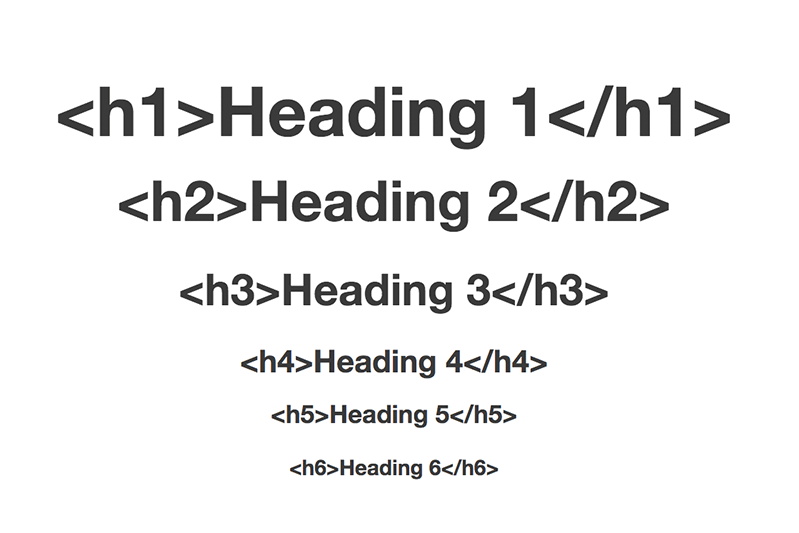
These header tags are HTML tags that tell a browser how to style content on a webpage. Header tags are important for
SEO since they help Google comprehend your content and make your website more user-friendly by making your content
more accessible.
For search engines like Google, they provide context and a hierarchy for your page. Consider header tags to be the
chapter titles of a book. With only a quick glance, you'll have a good idea of what they're about. The most
important material, such as a content's main subject or title, is designated with an H1 tag. Sub-headings with the
H2 and H3 tags are popular. Finally, within those subsections, H4, H5, and H6 tags can be utilized to create
additional structure.

Here Are The 5 Tips To Use Header Tags Effectively
● Keep Your Header Tags Within 60-70 Characters
Treat your header tag as a headline and not as a paragraph. The fewer the characters used in the header tags, the
easier it is to capture your audience's attention. Remember to make the header content effective, though.
● Don't Use More Than One H1
H1 is like a title to the book. If we use more than one title, it will lead to confusion and this will be a barrier
between you and the readers.
● Add Keywords To Your Header Tags
Keywords always help you to get the desired attention. Always try to add your keywords to your header tags, but
don't make it a force-fit.
● Maintain Consistency
Always remember that consistency is the key to success. If you don't maintain consistency, search engines will not
consider your website while formulating the ranking of the search engine results page. By consistency, we mean that
if you keep one of your header tags in title-case, then the rest of the header tags should also be in title-case.
● Interesting Header Tags Always Pull Attention
Tell the readers what your content is about. Add interesting header tags that will pull your readers to visit your
website whenever they are in need of something. No one wants to read an article that has uninteresting and ambiguous
header tags.
If you want to make your website's content more appealing to the audience and improve your SEO, then it's better to outsource this task to a dedicated SEO agency. This leads us to Search Munky, one of the best website analysis tools available on the online market. This user-friendly online SEO tool aids users with the best SEO practices they'll ever come across. From content writing to a free website SEO audit, Search Munky does it all for you! All you need to do is visit the website and start your SEO journey with one of the best in the game!